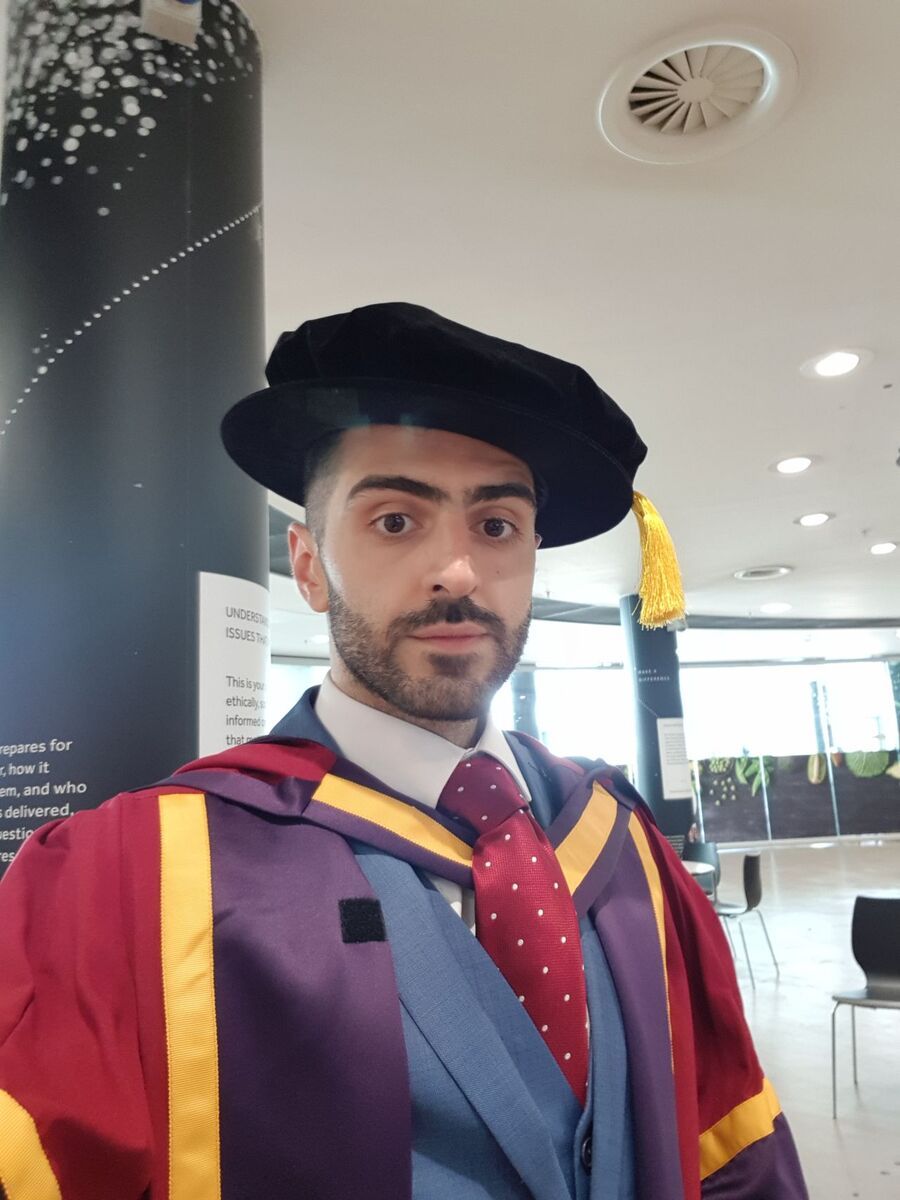

Last week, I travelled to Germany with my research team as part of the University of Manchester–Heidelberg initiative. Representing Manchester, I found myself in a room buzzing with energy: researchers sharing ideas, debating methods, sketching concepts on whiteboards, and scribbling notes faster than I could keep up. I cannot take credit for how well the Germany visit went. My colleagues did an incredible job, very organised and focused. I was simply fortunate to be there and witness it all.

Over the last year, I noticed something interesting. So much potential gets lost between sessions, workshops, and conferences. People are deeply engaged in the moment, but that momentum rarely survives once everyone returns home. This happens everywhere, at conferences, workshops, and seminars. We leave inspired and full of ideas, then return to our routines, and the spark fades.
How many times have we had promising discussions with colleagues from other institutions, only for it all to fade once it’s over? It even made me question: what’s the point, and how did we get here?
A few things come to mind:
1. We love our routines, and collaborations disrupt them.
Routines are comforting. They give us control and predictability in a world where academia often feels chaotic. So when a new collaboration comes along, it’s exciting but also disruptive. Suddenly you’re dealing with different time zones, working styles, and expectations. After the event ends, it’s easier to retreat back to what feels familiar. The spark of collaboration fades because people are trying to protect their limited time and mental space which is understandable.
2. Communication gets messy once everyone goes home.
In person, everything flows. Ideas bounce around naturally but once we shift to emails, that flow breaks. Messages get buried and tone gets lost. Before long, the same group that couldn’t stop talking at the whiteboard now struggles to keep a single thread alive. The digital tools we rely on are not built for creative, open-ended dialogue. They are built for transactions which is why so many potentially great collaborations die in the inbox.
3. The one-off event model doesn’t work.
When conferences or workshops are designed as standalone events, they unintentionally become performances. Everyone shows up, shares their best work, networks intensely, and then disappears. It is an impressive display, but it doesn’t leave room for continuity. True collaboration requires slower, ongoing interaction. Without structures to support that, all we get are snapshots of potential rather than sustained progress.
So the real question is: how do we move beyond token collaborations and create spaces where connections actually continue?
Maybe an even deeper one: how do we reach people who never even get the chance to be in those rooms, but are just as ambitious and capable?

Building a research ecosystem that lasts
My vision is to build an ecosystem where ideas grow beyond a single event, and research becomes a collective effort rather than an isolated task.
But like any great session, the real test begins when it is over. People return to their projects, and the spark slowly fades. That’s why I created the ResHub community, a shared space for anyone who has joined one of my workshops. It allows discussions to continue, ideas to grow, and learning to be sustained long after the sessions end.
For those who couldn’t attend the live sessions, both workshops are now available together as a bundle. The package includes full recordings, shared materials, and practical templates to help you put your learning into action. You’ll also get access to the ResHub community so you can continue connecting with peers and staying motivated. (The bundle brings everything together in one place and comes with £10 off compared to purchasing separately.)

Life Outside Academia
In my journey to thrive outside academia, I’m really enjoying strength training, even though it can be tough to fit into a packed schedule. I’ve committed to putting my health first.
My workouts focus on compound movements like deadlifts, pull-ups, and squats. Taking a gym break actually helps me return to work feeling more focused and energised.
Alongside this, I’ve been doing freelance writing to enhance my creativity. This work goes beyond academic topics and explores my thoughts, dreams, and ideas, giving me a space to experiment and reflect in ways my research does not always allow.

That is all for this week. Keep living, keep exploring, keep succeeding.
